eFill Signatures

info@efillsignatures.com +91-973 181 5486

Digital Signature in Computer Network Security

What is a Digital Signature?

A Digital Signature is a cryptographic technique used to verify the authenticity and integrity of a digital message or document. In computer network security, digital signatures play a vital role in ensuring that the communication between parties remains secure and tamper-proof.

Role of Digital Signature in Network Security

Digital signatures help establish trust and security in computer networks by ensuring that messages, files, and data transfers are not altered during transmission. They provide a way to authenticate the sender and confirm that the message has not been modified.

How Digital Signatures Work in Computer Networks

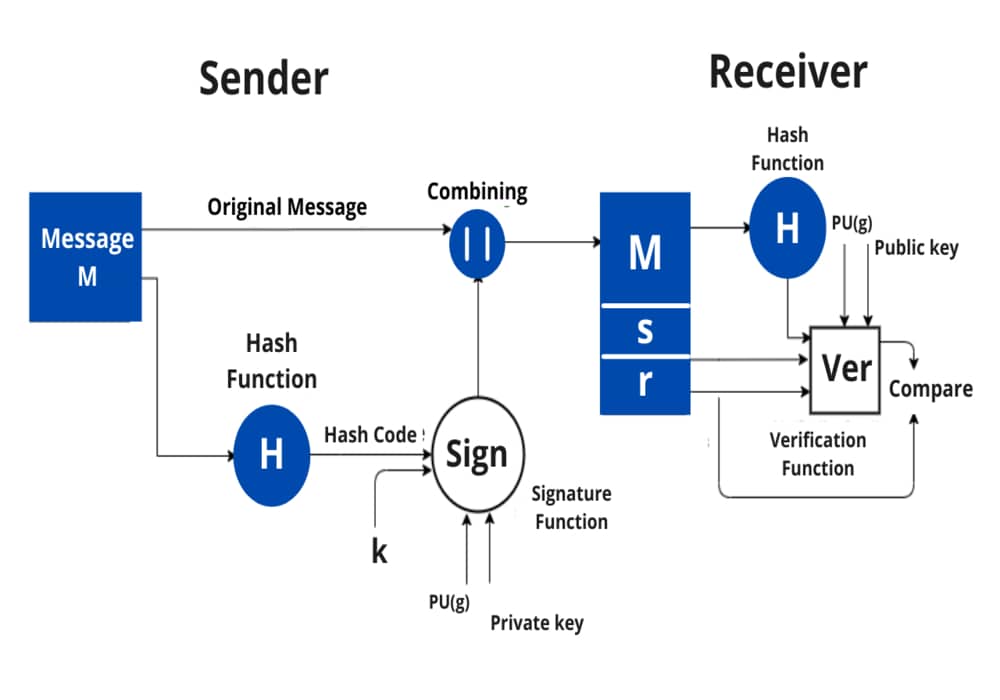
  • The sender uses a private key to sign the message.
  • The signature is attached to the message and sent to the receiver.
  • The receiver uses the sender’s public key to verify the signature.
  • If the verification is successful, it ensures that the message is authentic and unaltered.
Digital Signature in CNS

Key Functions of Digital Signatures in Network Security

  • Authentication: Confirms the identity of the sender or the source of the message.
  • Integrity: Ensures that the data has not been modified or corrupted during transmission.
  • Non-repudiation: Prevents the sender from denying the authenticity of their signature or message.
  • Confidentiality: Works alongside encryption to maintain data privacy.

Advantages of Using Digital Signatures in Computer Networks

  • Provides secure communication over public or private networks.
  • Prevents unauthorized access and tampering of sensitive data.
  • Reduces the risk of phishing, spoofing, and identity fraud.
  • Ensures compliance with data protection and cyber laws.
  • Improves the efficiency of digital transactions and workflows.

Applications of Digital Signatures in Network Security

  • Securing emails and confidential communications.
  • Authenticating software downloads and updates.
  • Protecting online transactions and e-commerce platforms.
  • Ensuring data integrity in VPNs and intranet systems.
  • Verifying documents in cloud-based services.

Digital Signature Algorithms Commonly Used

  • RSA (Rivest–Shamir–Adleman): Most widely used for secure data transmission.
  • DSA (Digital Signature Algorithm): Used by the U.S. government for secure signing.
  • ECDSA (Elliptic Curve Digital Signature Algorithm): Used for higher security with smaller key sizes.
  • SHA (Secure Hash Algorithm): Used to create a hash of the message for integrity verification.

Importance of Digital Signature in Cybersecurity

In today’s digital world, where data breaches and cyber threats are increasing, digital signatures ensure data authenticity, trust, and compliance. They are an essential part of Public Key Infrastructure (PKI) used in securing web communications, online transactions, and business systems.

FAQs on Digital Signature in Network Security

1. What is the main purpose of a digital signature in network security?

The main purpose is to ensure data integrity, authenticity, and non-repudiation of digital communications and documents.

2. How does a digital signature protect against hacking?

It uses encryption and key-based verification, preventing attackers from altering or faking messages or files during transmission.

3. Is a digital signature the same as encryption?

No. Encryption protects data privacy, while digital signatures verify authenticity and integrity of data.

4. What are the common algorithms used for digital signatures?

RSA, DSA, and ECDSA are the most commonly used digital signature algorithms in computer network security.

5. Why is non-repudiation important in network security?

It prevents the sender from denying that they sent a particular message, ensuring accountability and trust.


Conclusion

Digital signatures are the backbone of modern computer network security. They guarantee that communications and data remain authentic, secure, and verifiable. For businesses, developers, and users, implementing digital signatures ensures compliance, trust, and protection in every digital interaction.